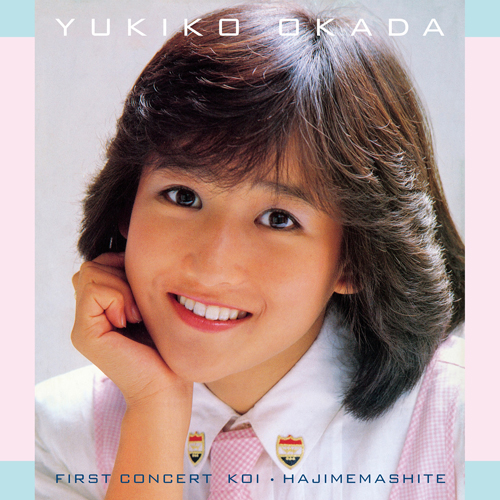
Yukiko Okada Memorial Day April 8
39 Years Since That Day in 1986: Remembering the Eternal Idol
April 8, 2026 | Memorial Article
April 8, 1986, at 12:15 PM. An 18-year-old girl threw herself from the rooftop of the 8-story Sun Music headquarters building in Yotsuya, Tokyo. Her name was Yukiko Okada—affectionately known as “Yukko,” an idol who endlessly captivated teenagers all across Japan.
Even now, 39 years later, bouquets of flowers are still laid near the Yotsuya 3-chome intersection, and fans from all over the country gather on her memorial day, April 8th. The “eternal 18-year-old” is by no means a figure of the past. In 2024, a series of music projects commemorated the 40th anniversary of her debut as a singer, and riding the wave of the global City Pop boom, her song “Summer Beach” is being streamed worldwide.
In this article, we respectfully look back on the life, achievements, and enduring legacy of the rare talent that was Yukiko Okada.
What Kind of Idol Was Yukiko Okada?
The “Little Princess” Who Came to Tokyo from Aichi
Yukiko Okada was born on August 22, 1967, in Ichinomiya City, Aichi Prefecture. Her real name was Kayo Sato. From an early age, she had a strong desire to express herself, possessing such artistic talent that she won first prize in a sketching contest during elementary school. She also challenged herself with oil and Japanese painting, becoming such an artistic young girl that in the summer of her second year of junior high school, she painted an oil portrait of her idol, Naoko Kawai.
At the same time, her dream of entering the entertainment world burned brightly, leading her to challenge herself with numerous auditions. The turning point came in 1982 when she participated in the audition program Star Tanjo! (A Star Is Born!). Despite her family’s initial opposition, she studied fiercely to meet the strict conditions set by her mother—”top academic grades” and “passing the entrance exam for her high school of choice”—and successfully made her way to Tokyo.
In September 1983, she transferred to Horikoshi High School. Her classmates included Yoko Minamino, Yoko Nagayama, and Minako Honda, a group that would later be known as the “legendary generation.”
A Swift Path to Stardom After Her Debut
On April 21, 1984, she made her major debut with the single “First Date.” Her catchphrase was “The Little Princess from a Wonderful Country.” Many of her songs, including her debut track, were produced by Mariya Takeuchi, and she quickly gained popularity with her wholesome, “refined upper-class girl” image.
In 1984, despite enduring a grueling schedule with only one day off the entire year, she swept the newcomer awards. Starting with the Best New Artist Award at the Japan Record Awards, she won almost every major music prize. Although she was hailed as the “Post-Seiko Matsuda” or “The Second Seiko Matsuda,” she herself stated, “I am myself. I don’t want to be an imitation of Seiko Matsuda,” always pursuing her own unique expression.
| Year | Major Awards |
|---|---|
| Dec 1984 | 26th Japan Record Awards: Best New Artist |
| Dec 1984 | 11th FNS Music Festival: Best New Artist |
| Oct 1984 | 14th Ginza Music Festival: Grand Prix |
| Sep 1984 | 10th Nippon Television Music Festival: Best New Artist |
| Feb 1985 | 22nd Golden Arrow Awards: Music Newcomer Award |
| Oct 1985 | 11th All Japan Kayo Music Festival: Gold Award |
A Record of Brilliant Activities — Singles and Representative Songs
9 Singles That Colored the Era
She released 8 singles in just two years after her debut, and “Kuchibiru Network,” released in January 1986, debuted at No. 1 on the Oricon chart. The unique collaboration—featuring lyrics by Seiko Matsuda (under the name Seiko), who was on maternity leave, and composition by Ryuichi Sakamoto—drew massive attention.
| No. | Title | Release Date | Peak Position |
|---|---|---|---|
| 1 | First Date | April 21, 1984 | 20th |
| 2 | Little Princess | July 18, 1984 | 14th |
| 3 | -Dreaming Girl- Koi, Hajimemashite | Sept 21, 1984 | 7th |
| 4 | Futari Dake no Ceremony | Jan 16, 1985 | 4th |
| 5 | Summer Beach | April 17, 1985 | 5th |
| 6 | Kanashii Yokan | July 17, 1985 | 7th |
| 7 | Love Fair | Oct 5, 1985 | 5th |
| 8 | Kuchibiru Network | Jan 29, 1986 | 1st |
She also energetically released four original albums. Tetsuya Komuro provided music for the first time as a professional composer for Okada’s album Jyugatsu no Ningyo (October Mermaid), and the tracks “Sweet Planet” and “Mizuiro Princess” remain as a testament to this milestone.
“Summer Beach” Rediscovered Overseas
Amidst the Japanese City Pop boom that took the world by storm around 2020, “Summer Beach” was discovered by overseas listeners. On Spotify, it is the most played of Okada’s songs, with a large portion of those streams coming from outside of Japan.
Guitarist Marty Friedman commented, “Her voice is bright and cute, and she sings very well. Her voice has a healing, sparkling quality, making her a rare presence overseas.” Transcending 39 years of time, Yukko’s singing voice continues to reach the world.
April 8, 1986 — What Happened on That Day?
The Final Days
On April 4, 1986, Yukiko Okada moved out of the home of Hideyoshi Aizawa, the president of Sun Music who had looked after her for years, to begin living alone in an apartment in Minami-Aoyama, Minato-ku, Tokyo. It was reportedly a temporary residence until she could find a more permanent apartment with an auto-lock security system.
The following day, April 5, her nationwide concert tour “Heart Jack” kicked off at Shibuya Public Hall. On April 6, she performed in Nagoya. Despite her busy schedule, those days should have been fulfilling.
However, on April 8, Okada attempted suicide by cutting her wrists and inhaling gas in her apartment. After being discovered by rescue teams and receiving treatment, she was taken to the Sun Music headquarters. Then, at 12:15 PM that same day, she jumped from the rooftop of the 8th-floor headquarters building, ending her life at the age of 18.
Various speculations regarding the cause of her suicide circulated, but the truth remains unknown to this day. It is only known that a suicide note, seemingly written in pencil on stationery, was left behind.
Sensationalized Media and the “Yukko Syndrome”
The following day, April 9, every broadcasting station covered the incident. Some news programs and tabloid shows broadcasted raw footage from the scene, causing a massive shock to the public.
Subsequently, a wave of copycat suicides occurred among young people. In the two weeks following April 8, there were more than 30 reported cases of minors committing suicide in a similar manner, a phenomenon that became known as “Yukko Syndrome.” It is estimated that youth suicides in Japan exceeded 800 cases in 1986.
Conversely, on the night of the incident, Hiroshi Kume, the anchor of the news program News Station, commented that they would “refrain from reporting on the suicide to avoid a chain reaction,” demonstrating a more restrained approach to journalism. This stance would later influence discussions leading to the development of suicide reporting guidelines.
| Date | Event |
|---|---|
| April 5, 1986 | “Heart Jack” concert tour begins (Shibuya Public Hall) |
| April 8, 1986 | Passes away at the Sun Music building in Yotsuya, Tokyo. Aged 18. |
| April 10, 1986 | Sun Music company funeral at Hosen-ji Temple. Attended by 3,000 industry peers and fans. |
| April 9, 1986 | Okada’s death is addressed in the House of Representatives Committee on Education. |
| April 25, 1986 | Deliberations in both houses of the Diet regarding “youth issues.” |
| 2000 | WHO publishes “Guidelines for Suicide Reporting.” |
Okada’s death reached the halls of the National Diet; on April 9, Minister of Education Toshiki Kaifu addressed the issue in the House of Representatives. An event that shook not only the entertainment industry but society as a whole became a major catalyst for re-evaluating the relationship between the media and suicide reporting.
The True “Yukko” Recalled by Those Around Her
Words from Mariya Takeuchi
—— Mariya Takeuchi (Songwriter/Composer)
Words from Yoko Minamino
—— Yoko Minamino (Horikoshi High School Classmate)
The Personal Side of Yukko
“When she wasn’t working, she wore glasses as thick as the bottom of a milk bottle”—this passage from an essay by Kyoko Koizumi conveys a relatable side of Yukko, distinct from her radiance on stage.
She was a huge fan of Hiroshi Tachi and would gleefully call out his name whenever he appeared on TV. She limited herself to one meal a day to enjoy her favorite foods. While she went running with the president every morning, she often found it difficult to sleep even after returning home late at night, rarely sleeping in a proper bed—these anecdotes bring her to life as a vivid human being.
Her kindness toward Noriko Sakai is also legendary. Just three days before her departure, she signed a photo panel she had been planning to discard during her move, writing “To Norippe-kun” before handing it over.
39 Years Later — Yukiko Okada Lives On
Endless Flowers and Lasting Devotion
On the memorial day of April 8, flowers are laid at the site in Yotsuya again this year. Fans from across the country also visit her grave at Joman-ji Temple in Aisai City, Aichi Prefecture, to honor her memory. In 1998, a three-day “Yukiko Okada Exhibition” was held at the Shinjuku Cultural Center, and in 2016, the first fan meeting since her passing took place.
Yoko Oginome, who debuted in the same year (1984), continued to visit her grave as of 2022. Her dedication to offering flowers at her friend’s grave for over 40 years speaks volumes about how Yukiko Okada continues to live in the hearts of many.
What the 40th Anniversary Illuminated
The year 2024 saw numerous release projects to mark the 40th anniversary of her debut. The discovery of legendary, “phantom” concert recordings in the Sun Music warehouse was also major news.
With the opening of an official YouTube channel, all her songs and music videos have been made accessible to listeners worldwide. Fans born in the Heisei and Reiwa eras continue to grow; Rika Shimakura of the idol group BEYOOOOONDS and Asahi of Little Glee Monster have frequently declared themselves fans of Yukko.
| Year | Major Posthumous Events |
|---|---|
| 1987 | A monument engraved with her handwritten poetry is erected at her gravesite. |
| 1998 | “Yukiko Okada Exhibition” held at Shinjuku Cultural Center. |
| 1999 | CD “Memorial BOX” released; “Hana no Image” is released as a recording for the first time. |
| 2016 | First fan meeting since her passing is held. |
| Circa 2020 | “Summer Beach” gains global attention during the overseas City Pop boom. |
| 2023 | Official Pony Canyon YouTube channel opens, releasing all her songs. |
| 2024 | 40th Anniversary of debut. 12-inch single, 7-inch BOX, and concert recording CD released. |
The Legacy of Yukiko Okada — The Purity of the “Idol” Profession
Music critic Osamu Takahashi remarked, “With the death of Yukiko Okada, the era of the professional idol singer also came to an end.” During a time when Onyanko Club—whose selling point was their “amateur” charm—was at the height of its popularity, Yukiko Okada embodied the image of an idol as a meticulously polished professional.
When asked which singer she aimed to be like, she answered, “Yukiko Okada.” Her earnest desire to “be myself” continues to shine without fading, even 39 years later.
April 8 arrives once more. This year, too, flowers bloom in Yotsuya, and under a distant sky, thoughts are quietly offered to Yukko.
Support services such as help hotlines are available in many regions.
— April 8, 1986. The eternal 18-year-old, Yukiko Okada. Her singing voice will continue to resonate across the world.




コメント