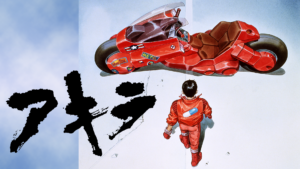

Introduction: An Immortal Masterpiece Etched in Anime History
The theatrical anime “AKIRA,” released in 1988, is a groundbreaking SF animation film in which manga artist Katsuhiro Otomo served in the triple role of original creator, screenwriter, and director. Even more than 30 years after its release, it continues to influence anime fans and creators worldwide with its overwhelming visual beauty and visionary storytelling.
This article will thoroughly explore why “AKIRA” is called a milestone in anime history, examining its appeal and the world it creates.
Basic Information and Synopsis of “AKIRA”
Work Overview
“AKIRA” is a theatrical animation film based on the manga of the same name by Katsuhiro Otomo. With the original creator himself serving as director, the unique worldview of the source material was fully realized on screen. The production budget was an unprecedented 1 billion yen for its time, making it one of the most ambitious projects in Japanese animation film history.
Story Setting
The story begins with a shocking premise. In 1988, a new type of bomb is used in the Kanto region, triggering World War III. Tokyo suffers devastating damage.
Thirty-one years later, in 2019, a massive megalopolis called “Neo-Tokyo” has been constructed on Tokyo Bay. With the Tokyo Olympics scheduled for the following year in 2020, the city is regaining its former prosperity, though an unsettling atmosphere lingers in the lower strata of society.
Main Story
The protagonist is Shotaro Kaneda, leader of a group of delinquent youths. He and his friends spend their days racing motorcycles through Neo-Tokyo, engaging in street racing and gang conflicts.
One night, while racing as usual, a strange child with an elderly face suddenly appears before Kaneda and his gang. His friend Tetsuo cannot avoid the child and crashes his motorcycle, sustaining injuries. Immediately after, a military helicopter lands at the scene and takes both the mysterious child and Tetsuo to a research facility.
This incident sets in motion an epic story that engulfs Kaneda, Tetsuo, and all of Neo-Tokyo.
Why “AKIRA” Is Called a Masterpiece
Overwhelming Visual Beauty and Animation Technology
The greatest feature of “AKIRA” is its astonishing visual quality. This film, which brought together the best animation techniques of its time, retains its beauty even by today’s standards.
Particularly noteworthy is the number of colors used. While typical anime productions used around 50 colors, “AKIRA” employed 327 special colors. This enabled rich color expression previously impossible in anime, including the brilliance of Neo-Tokyo’s night scenery, neon signs, and the intensity of explosion scenes.
The character movements are also extremely fluid. While standard anime uses about 8 drawings per second, “AKIRA” uses 12 drawings per second, with important scenes featuring 24 drawings. The dynamism of motorcycle chase scenes and subtle character facial expressions are depicted with overwhelming information density.
The Prescience of Its Dystopian Worldview
The Neo-Tokyo of 2019 depicted in “AKIRA” is filled with details that seem to have predicted the actual year 2019. A sign in the film reads “Tokyo Olympics Opening Soon,” and the fact that the 2020 Tokyo Olympics were actually scheduled seems more than mere coincidence.
Furthermore, the social issues portrayed in the film resonate with contemporary society. Income inequality, political corruption, youth discontent, terrorism, and the runaway nature of military research—despite being created in the 1980s, the work sharply depicts problems that modern society faces.
A Cyberpunk Landmark
“AKIRA” stands as a representative work of Japanese cyberpunk, having profoundly influenced creators worldwide. The interweaving of elements such as a decayed yet highly developed megacity, anti-establishment youth culture, psychic powers as unknown forces, and government and military conspiracies creates a distinctive worldview.
The visual imagery of the near-future city that “AKIRA” presented—neon-lit chaotic Tokyo streets, motorcycles racing on highways, and ruins of the old city—has influenced numerous subsequent SF works, including films like “Blade Runner,” the “Matrix” series, and “Ghost in the Shell.”

Captivating Characters
Shotaro Kaneda: The Charismatic Leader
The protagonist Kaneda is a delinquent youth who nevertheless cares deeply for his friends and has a strong sense of justice. His trademark bright red motorcycle and red jacket have become iconic symbols of “AKIRA.”
Though appearing frivolous, Kaneda possesses a strong core and the courage to act for his friends regardless of danger. His character has captured the hearts of many viewers.
Tetsuo: The Tragic Psychic
Tetsuo, Kaneda’s childhood friend, is a complex character harboring deep insecurities. Holding an inferiority complex about always being behind Kaneda, he gradually transforms after gaining psychic powers through military experiments.
A mixture of joy at obtaining power, fear of uncontrollable abilities, and rivalry with Kaneda drives Tetsuo down a path of destruction. His tragic fate brings profound human drama to the work.
Kei and Kaori: Female Characters Who Color the Story
Kei, a member of an anti-government guerrilla group, is portrayed as a strong-willed, action-oriented woman. Her encounter with Kaneda leads him to the heart of the incident.
Meanwhile, Kaori, Tetsuo’s girlfriend, represents what could be called Tetsuo’s last conscience as he drowns in power. Her existence is the only hope for maintaining Tetsuo’s humanity.
Innovation in Music and Sound
The soundtrack for “AKIRA” was created by Geinoh Yamashirogumi (Shoji Yamashiro). The distinctive sound incorporating gamelan and Balinese ethnic music brilliantly expresses the chaos and cacophony of the futuristic city.
Particularly memorable are tracks like “Kaneda’s Theme” and “Requiem.” The music, weaving together heavy drum beats and ethnic choruses, creates an overwhelming sense of immersion in unity with the visuals.
Meticulous attention was also paid to sound effects. Even motorcycle engine sounds were created by recording actual motorcycle sounds and processing them to produce a uniquely heavy quality.
International Recognition and Influence
“AKIRA” received high praise not only in Japan but also overseas. Particularly in America and Europe, it is positioned as a work that brought Japanese anime culture to global attention.
It has profoundly influenced Hollywood directors, with renowned filmmakers such as James Cameron and the Wachowskis publicly acknowledging the influence of “AKIRA” on their work.
In the music industry as well, “AKIRA’s” influence has been significant, with homages to the film appearing in music videos by artists like Kanye West, permeating pop culture as a whole.
Themes That “AKIRA” Explores
Questions About Power Through Psychic Abilities
At the core of the work is “psychic power” as absolute force. What happens when humans obtain god-like power? Tetsuo’s character depicts both the craving for power and human frailty in being unable to control that power.
“AKIRA” is the name of a boy who once destroyed Tokyo with psychic powers. That force is being researched by the military, threatening to create tragedy once again. The theme of scientific and technological progress versus human immaturity in handling it resonates deeply with us today.
Generational Conflict and Youth Isolation
Young people like Kaneda and Tetsuo live amid the contradictions of a society created by adults. Behind the glamorous event of the Olympics, violence and despair swirl at the bottom of society.
Their reckless behavior is an expression of directionless anger and loneliness. Adults seek to use and control youth but never truly listen to their voices. This generational disconnect remains a universal theme across time.
Civilization’s Collapse and Rebirth
“AKIRA” is also a story of destruction and creation. Tokyo, once collapsed, is rebuilt, yet faces the crisis of destruction again. This cycle seems to symbolize human history itself.
The spectacular destruction scenes in the finale leave a powerful impression on viewers. Yet simultaneously, they suggest hope—that new beginnings await after destruction.
The Enduring Appeal of “AKIRA”
More than 30 years after its release, “AKIRA” continues to gain new fans. The reason is not mere nostalgia.
The social issues depicted in the work remain relevant today, and the visual quality is still overwhelming even by modern standards. Moreover, the philosophical questions posed by the story continue to resonate with people across time.
Even in our digital age, the warmth and power of “AKIRA’s” hand-drawn animation remains special. Each carefully drawn frame contains the passion and skill of its creators.
Conclusion: Why You Should Watch It and the Work’s Significance
The theatrical anime “AKIRA” possesses value beyond mere entertainment—it is a work of art. Overwhelming visual beauty, profound themes, a worldview ahead of its time, and cultural importance that continues to influence—all these elements fuse together, making this work truly worthy of being called a milestone in anime history.
For those who have not yet seen “AKIRA,” this is a work you must experience. And for those who have already seen it, rewatching will surely yield new discoveries.
The vision that Katsuhiro Otomo presented in 1988 remains fresh and thought-provoking for us living in the 2020s. “AKIRA” is a work from the past that continues to question us in the present tense—an immortal masterpiece.

コメント