Introduction
Mitsumasa Anno was an artist who gained high acclaim both in Japan and abroad as a leading painter and picture book author. His unique body of work, characterized by delicate watercolor paintings and drawing from his deep knowledge of science and mathematics, has been beloved by audiences ranging from children to adults worldwide. This article provides a detailed introduction to Anno’s complete portrait, from his early life to his brilliant achievements, representative works, and lasting influence on future generations.
Early Life and Youth
Childhood in Tsuwano
Mitsumasa Anno was born on March 20, 1926, in Tsuwano Town, Kanoashi District, Shimane Prefecture. Growing up in the nature-rich environment of Tsuwano, Anno was a boy who loved drawing from an early age. While nurturing his dream of becoming a painter, he developed his sensitivity in an environment with many opportunities to experience art and culture.
Tsuwano at that time was known as the “Little Kyoto of San’in,” a castle town whose beautiful townscape and natural scenery would greatly influence Anno’s later works. His attachment to his hometown’s landscapes never changed throughout his life and remained the foundation of his creative activities until his final years.
War Years and Teaching Career
After the war, while working as an art teacher, he continued his creative work with interests in art, science, mathematics, and human endeavors. Following the end of World War II, Anno served as a substitute elementary school teacher, and in 1950, he moved to Tokyo to work as an art teacher.
While working as a teacher, he also engaged in book design and textbook editing work, and actively pursued his career as a painter. His experience as a teacher greatly influenced his later activities as a picture book author. His deep understanding of children’s perspectives and learning processes became the foundation for Anno’s educational yet enjoyable creative world.
Debut and Establishment as a Picture Book Author
Debut with “Fushigina E” (Strange Pictures)
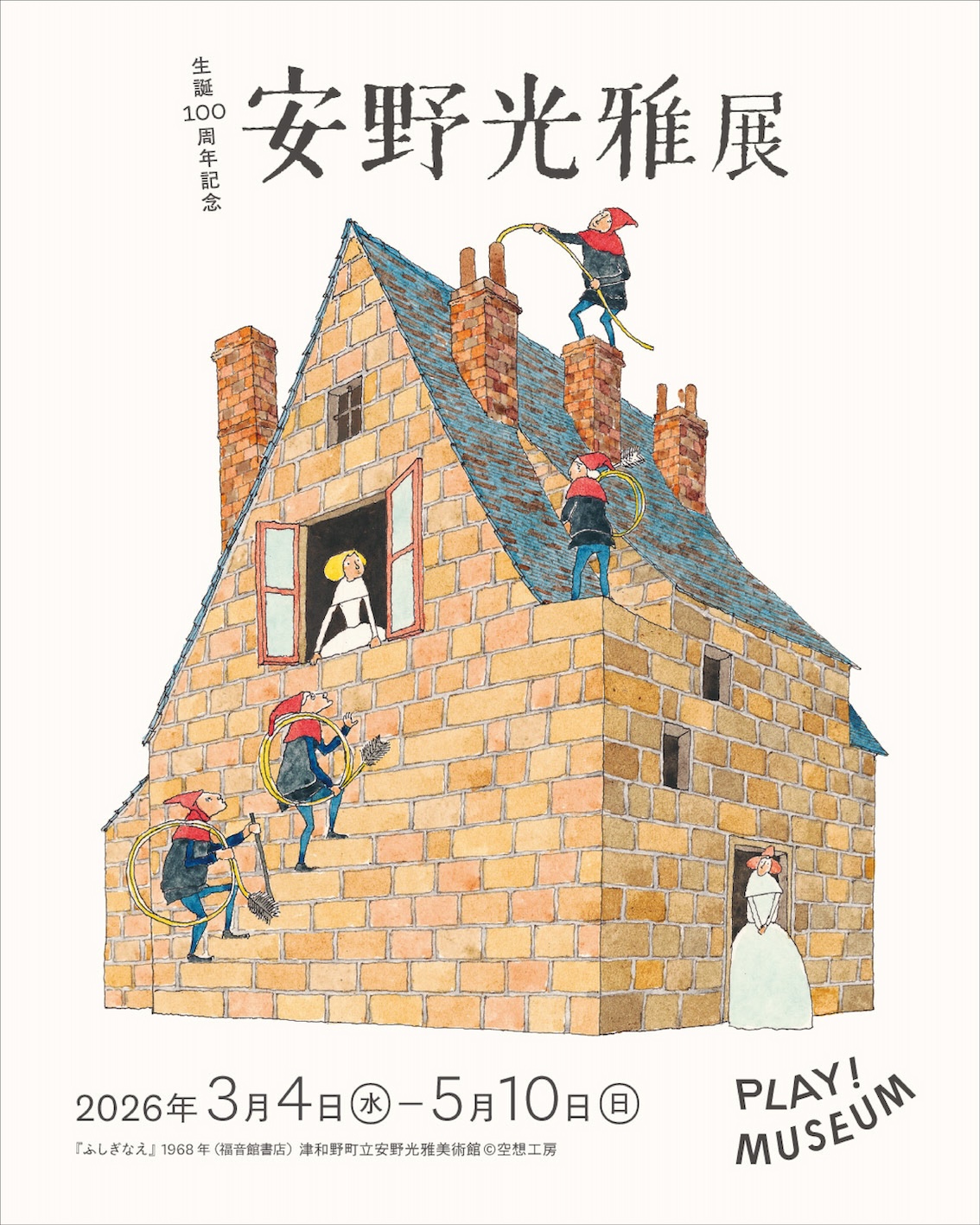
In 1968, he made his debut as a picture book author with “Fushigina E.” This debut work was a groundbreaking piece depicting the world of “trick art” using impossible figures.
The work featured impossible spaces such as stairs that return to the original floor when climbed, or water flowing from a faucet that becomes a river and circulates back to the plumbing, all guided by small character figures. While influenced by Escher, this work, rendered in Anno’s uniquely warm expression, received worldwide acclaim and made the name of picture book author Mitsumasa Anno famous overnight.
Establishing a Unique Style
He gained popularity with his delicate watercolor style and original content, subsequently publishing masterpieces that would go down in picture book history.
A characteristic feature of Anno’s works is their subdued color palette, rarely using primary or bright colors. The soft color usage that takes advantage of watercolor transparency gives viewers a sense of peace and nostalgia. Additionally, the carefully detailed illustrations offer new discoveries with each viewing, possessing a depth that captivates not only children but adults as well.
Numerous Representative Works
“Anno’s Journey” Series
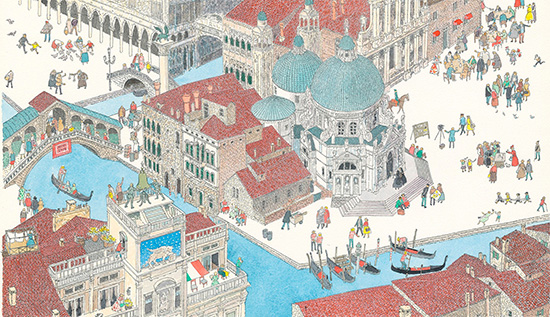
When it comes to Mitsumasa Anno’s representative works, the “Anno’s Journey” series stands out above all. This series, drawn over more than 40 years, has achieved cumulative sales of 1.52 million copies for nine of the ten books.
This series consists of wordless picture books depicting a traveler on horseback journeying through various countries’ landscapes. Beginning with the first volume in 1977 (Central Europe edition), the series includes Italy, Britain, America, Spain, Denmark, China, Japan, Switzerland, and the tenth volume (Netherlands edition) discovered as a posthumous manuscript, depicting beautiful landscapes and people’s lives from around the world in intricate detail.
Each page contains landscapes modeled after famous paintings, scenes from fairy tales, and historical figures, allowing readers to enjoy a treasure-hunt-like experience. As works meant purely for enjoying pictures, they continue to be loved worldwide regardless of age or nationality.
Works Themed on Mathematics and Science
With deep knowledge of science and mathematics, his vigorous curiosity and imagination were expressed in various fields as an illustrator and designer, as a writer of essays, and as an educator through textbook editing.
The “Hajimete Deau Sugaku no Ehon” (First Encounter with Mathematics Picture Books) series is a representative work showcasing Anno’s mathematical sensibility. Full of ingenious ways to learn mathematical thinking basics such as odd-one-out, sequencing, and size comparison through pictures, it has been cherished by many children since its first edition in 1982.
In “Tendosetsu no Ehon” (The Picture Book of Geocentrism), he explains the transition from geocentrism to heliocentrism in an accessible way while never forgetting to respect those who once believed in geocentrism. The work conveys the importance of viewing things from multiple perspectives through the history of science.
He also created numerous works introducing concepts of numbers and shapes with beautiful illustrations, such as “Kazoete Miyo” (Let’s Count) and “Fushigina Tane” (The Magic Seed).
Picture Books of Letters and Words
“Aiueo no Hon” (The Aiueo Book) and “ABC no Hon” (The ABC Book) are masterpieces that, while being educational picture books that nurture interest in letters, also hold value as works of art. The letters on the left pages are depicted as if made of wood, with corresponding illustrations intricately drawn on the right pages.
In “Aiueo Mise” (Aiueo Shops), various stores are arranged in Japanese alphabetical order, conveying Japanese lifestyle culture including traditional shops no longer seen today.
“Mori no Ehon” (The Forest Picture Book) is a hidden picture book with 130 animals concealed in the forest. The mechanism where various creatures emerge from tree bark, grass shadows, and between branches when gazed at intently stimulates children’s observational skills and imagination.
Other Important Works
“Ehon Heike Monogatari” (The Tale of the Heike Picture Book) (1996) is a major work expressing Japanese classics through Anno’s beautiful illustrations. It received high praise as a work fusing deep historical understanding with artistry.
Anno’s creative world was extremely diverse, including trick art series works such as “Sakasama” (Upside Down) and “Fushigina Circus” (The Magic Circus), and works utilizing mathematical ideas such as “10-nin no Yukai na Hikkoshi” (The Cheerful Moving of 10 People).
International Recognition and Awards
A Painter Recognized by the World
Translated in various countries worldwide, he won the Bologna International Children’s Book Fair Graphics Prize in 1978 for “Anno’s Art Collection ANNO 1968-1977” and in 1980 for “Uta no Ehon (2) Sekai no Shoka yori” (Song Picture Book (2) from World Songs).
Anno’s works possessed a universality that could be understood and loved across cultural and linguistic barriers. Wordless picture books in particular could be enjoyed equally by children from any country in the world and were valued as truly international works.
Winning the Hans Christian Andersen Award
In 1984, he received the Hans Christian Andersen Award for his entire body of work, earning high international acclaim.
The Hans Christian Andersen Award, also called the “Little Nobel Prize,” is the highest honor in children’s literature. With this award, Mitsumasa Anno established his position as a world-class representative picture book author from Japan.
Other Major Awards
- 1974 Ministry of Education Art Encouragement Prize for New Artists
- Kate Greenaway Medal Special Award (United Kingdom)
- Fifty Most Beautiful Books Award (United States)
- BIB Golden Apple Award (Czechoslovakia)
- Kodansha Publishing Culture Award Picture Book Prize
- 1989 Medal with Purple Ribbon
- 2008 Kikuchi Kan Prize
- 2012 Person of Cultural Merit
These numerous domestic and international awards are proof that Anno’s diverse creative activities and outstanding artistry were widely recognized.
Creative Approach and Artistic Philosophy
Perspective as a “Teacher”
Throughout his life, Anno maintained the perspective of a “teacher” cultivated during his teaching years. His original ideas for teaching difficult things to children in fun and simple ways were born from his experience as an educator.
Anno’s picture books are filled with mechanisms that allow readers to experience the joy of thinking and discovering for themselves rather than being forced to accept correct answers. The attitude of valuing “developing the habit of thinking for oneself” is common to all his works.
Commitment to Sketching
Anno said, “Sketching is like performing while looking at sheet music. There’s a landscape as the score, and I’m performing it—that’s the closest description.”
For Anno, who traveled the world making sketches, drawing landscapes was not mere realism but dialogue with the landscape and an expressive act incorporating his own interpretation. His words, “When you gaze intently at a landscape with concentration, you can understand things like distant trees rustling. When you concentrate all your nerves, there are things that become visible and audible,” convey his sincere attitude toward his subjects.
Wide-ranging Interests and Cultivation
Anno’s interests extended extremely broadly, not only to art but also to science, mathematics, literature, and music. Against a background of rich knowledge and cultivation, he created works that organically connected each field.
He was also active as an essayist, leaving many written works including the six-volume “Mitsumasa Anno Complete Works.” Anno’s words as both a painter and excellent writer were warm, humorous, and full of deep insight.
Final Years and Legacy
Opening of the Museum
In 2001, the Mitsumasa Anno Museum opened in Tsuwano. This museum, which gave form to his feelings toward his hometown, provides visitors with opportunities to experience Anno’s world through permanent exhibitions of his original drawings and works.
Additionally, the “House in the Forest Anno Mitsumasa Museum” has also opened in Kyotango City, Kyoto Prefecture, serving as a place to experience art through Anno’s works.
Creative Activities in His Final Years
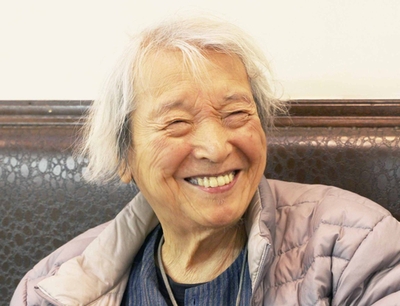
He passed away on December 24, 2020, at the age of 94. Having walked through his 94 years of life alongside pictures, Anno never lost his passion for creation until the very end.
“Anno’s Journey X Netherlands Edition” was discovered as a posthumous manuscript after Anno’s death and published in 2022. This “final journey” has moved many readers as the culmination of the world of beauty that Anno pursued throughout his life.
Influence on Future Generations
Mitsumasa Anno’s works continue to be read around the world today, constantly gaining new readers. Their universal appeal transcends time and will surely continue to be loved for years to come.
The “Mitsumasa Anno Exhibition Commemorating His 100th Birthday” is scheduled to be held at PLAY! MUSEUM in Tachikawa, Tokyo, starting in March 2026, with ongoing efforts to connect Anno’s creative world to the future.
What Mitsumasa Anno Left Behind
Mitsumasa Anno was a pioneer who greatly expanded the possibilities of the picture book medium. He elevated picture books, often considered for children, to works of art that adults could enjoy, achieving educational and aesthetic value at the highest level.
His body of works that naturally fused logical fields such as science and mathematics with the sensory field of art demonstrated the possibilities of creativity that transcends the boundaries between humanities and sciences.
Above all, what is common to Anno’s works is deep affection for humanity and nature, and a flexible perspective that views things from multiple angles. His attitude of not forcing correct answers but making readers think and discover for themselves is suggestive even for contemporary education.
Conclusion
Mitsumasa Anno was a rare artist who demonstrated multifaceted talents as a painter, picture book author, essayist, and educator. The sensibility nurtured in the nature of Tsuwano, the educational perspective cultivated during his teaching years, the broad worldview gained from traveling the world, and his lifelong learning and spirit of inquiry created his one-of-a-kind creative world.
Delicate and beautiful watercolors, intellectual playfulness, warm humor, and deep humanity—Mitsumasa Anno’s works possess universal appeal that touches people’s hearts across time.
His works are still read around the world today, continuing to convey the joy of discovery and the pleasure of learning to new generations of children. The rich artistic legacy left by Mitsumasa Anno will continue to provide inspiration and emotion to many people in the future.


コメント