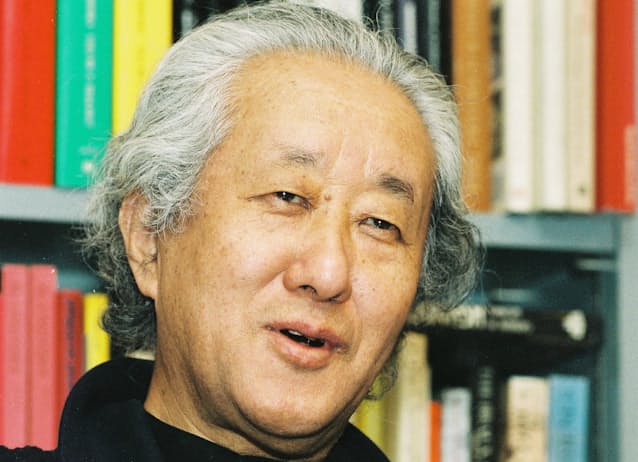
Introduction: A World-Renowned Architect Who Won the Pritzker Prize, Architecture’s Nobel Prize
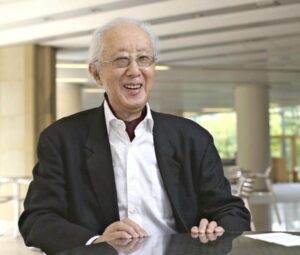
Arata Isozaki was born on July 23, 1931, in Oita City, Oita Prefecture, and passed away on December 28, 2022, at the age of 91. He was one of Japan’s most distinguished architects. In 2019, he received the Pritzker Prize, known as the Nobel Prize of architecture, becoming the eighth Japanese architect to receive this honor.
Isozaki was known as an “intellectual giant” who led the world in both theory and practice, having created over 100 architectural works both domestically and internationally. Beyond architectural design, he was an author and thinker who published numerous essays and developed architectural theories that guided the postwar architectural world. His activities extended far beyond architecture, exerting influence across various fields including philosophy, art, design, cultural theory, and criticism, making him a truly rare figure.
Currently, the Art Tower Mito is hosting “Arata Isozaki: Archipelago as Architecture,” the first major domestic retrospective exhibition since his passing, running until January 25, 2026. This article provides a detailed introduction to Isozaki Arata’s life, architectural philosophy, and representative works on the occasion of this exhibition.
The Life of Arata Isozaki: From His Master Kenzo Tange to Independence and the World Stage
Youth in an Avant-Garde Environment
Isozaki began with the activities of “Shin-Seiki-Gun” (New Century Group), a painting circle in Oita City. This was an avant-garde environment where Masumi Yoshimura, Genpei Akasegawa, and Sho Kazekura, who would later become active in Neo-Dada, were also members. This experience would greatly influence Isozaki’s later perspective as an architect.
Apprenticeship Under Kenzo Tange
After graduating from the Department of Architecture, Faculty of Engineering, University of Tokyo in 1954, Isozaki joined Kenzo Tange’s laboratory and participated in “Tokyo Plan 1960” alongside Kisho Kurokawa and others. During this period, Neo-Dada was conducting anti-art activities based at the Yoshimura Atelier in Shinjuku Hyakunin-cho, which Isozaki frequently visited. The young Isozaki formed his unique philosophy while moving between the boundaries of architecture and avant-garde art.
Independence and Early Representative Works
In 1963, Isozaki left Kenzo Tange’s laboratory and established Arata Isozaki Atelier. In 1967, the Oita Prefectural Library was completed, becoming an early representative work of the 36-year-old Isozaki. This building was later renovated as Art Plaza and continues to be cherished as a symbolic presence in Oita City today.
The 1970s: Development into Museum Architecture
1975 was a prolific year for Isozaki, as he published his book “The Dismantling of Architecture” while completing the Museum of Modern Art, Gunma and the Kitakyushu Municipal Museum of Art, among others. During this period, Isozaki established his position as a master of museum architecture.
The 1980s: As a Standard-Bearer of Postmodern Architecture
With the completion of Tsukuba Center Building in 1983, Isozaki came to be regarded as a standard-bearer of postmodern architecture. This work is still highly regarded today as a representative example of Japanese postmodern architecture.
Later Years: Expansion of International Activities
From the 1980s onward, he worked on many overseas projects including the Museum of Contemporary Art, Los Angeles, and the Brooklyn Museum. He expanded his activities to China, the Middle East, and Europe with projects such as the Qatar National Convention Centre, Allianz Tower in Milan, Shanghai Symphony Hall, and Hunan Provincial Museum.
In 2022, Isozaki closed his 91-year life at his final residence in Naha City.
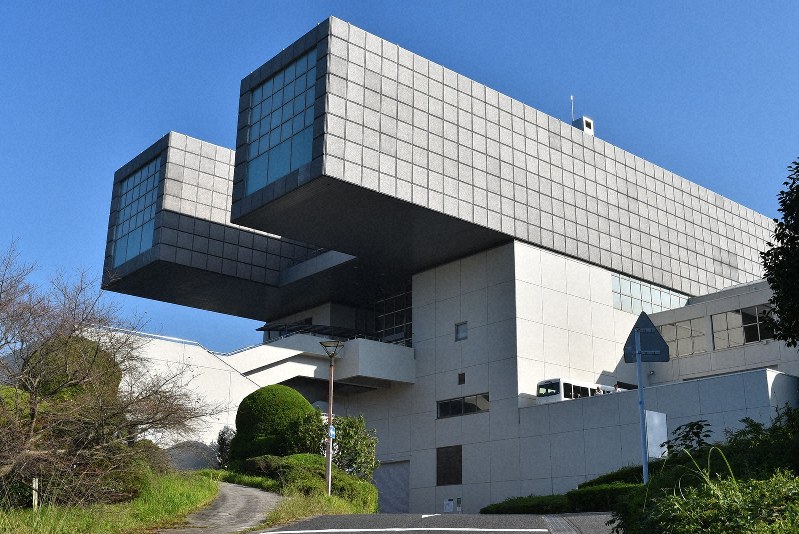
What is Postmodern Architecture? Arata Isozaki’s Architectural Philosophy
From Modernism to Postmodernism
Isozaki was one of the architects who led postmodern architecture through his role in organizing the world’s architectural situation, repositioning it within the overall cultural context, and compiling a comprehensive perspective and critical language.
Postmodern architecture is an architectural style born as a criticism of modern architecture (modernism), which emphasized rationality and functionality. Besides using geometric designs that were Isozaki’s forte, he created mannerist works incorporating historical references—a characteristic of postmodernism—and scattered with metaphors and symbols.
“Process Planning” Theory
Isozaki established a theory called “Process Planning.” This theory considers each cross-section of temporal progression as a process that constantly transitions to the next stage, and in designing public buildings in regional cities where client requirements often continue to change, it proactively reframed the architect’s position.
The Concept of “Archipelago”
In his book “Japoneseness in Architecture,” Isozaki wrote that sediment forms in a state of globalization, creating islands, and the world would become an archipelago as an aggregate of countless solidifications. This concept of “archipelago” became an important spatial concept in Isozaki’s later philosophy.
Fusion of Critical Activity and Architectural Practice
The fact that Isozaki’s activities were always accompanied by critical activity made it remarkably difficult to position his practical work as an architect—architectural design and urban planning—within specific movements or styles in architectural history. Conversely, this indicates that Isozaki was an existence that transcended the framework of a mere architect.
Explaining Arata Isozaki’s Representative Works
Oita Prefectural Library (Now Art Plaza) 1967
An early representative work of Isozaki, it was renovated in 1997 to become Art Plaza. This was the work that established his “Process Planning Theory,” with a plan where light enters the interior from all angles—from above through skylights in the lobby and horizontally through windows in the reading rooms.
Currently, it functions as the Arata Isozaki Architecture Museum, with the third floor featuring permanent exhibitions of models and materials of Isozaki’s architectural works.
The Museum of Modern Art, Gunma 1974
The design of The Museum of Modern Art, Gunma was commissioned to Arata Isozaki in 1971. In Isozaki’s concept, an aggregate of cubic frames based on a 1.2-meter standard was envisioned as a void metaphorically compared to a picture frame surrounding artworks, with the space through which artworks pass fluidly changing and capable of multiplication.
The current building uses an aggregate of cubic frames with 12-meter sides as its basic structure. The aluminum panels and glass grids of the exterior walls have 120-centimeter sides, the marble panels on the walls and floors of the entrance hall have 60-centimeter sides, and the floor tiles are 15-centimeter squares—all structural elements are squares based on dimensions derived from the 12-meter standard.
The concept of multiplying cubes was proven by the addition of the Theater Building in 1994 and the Contemporary Art Building in 1998. For this architecture, Arata Isozaki received the 27th Architectural Institute of Japan Award in 1975.
Tsukuba Center Building 1983
Tsukuba Center Building is architect Arata Isozaki’s representative work and is considered a representative work of Japanese postmodern architecture. Completed and opened in June 1983, it is a complex facility consisting of a hotel building, concert hall, commercial stores, a plaza, and other components, serving as a symbolic presence of the research and academic city.
It features a plaza that is an inversion of Rome’s Piazza del Campidoglio. While the Piazza del Campidoglio is located at the top of a hill with a statue at its center, the Tsukuba Center Building plaza is located at a lower level with a fountain at its center.
Isozaki was constantly conscious of “ruined architecture” in his writings. In designing this building, he also published drawings of it in a ruined state. This work embodies Isozaki’s philosophy that architecture is something that changes over time.
Art Tower Mito 1990
Art Tower Mito is a composite cultural facility opened in 1990 to commemorate the 100th anniversary of Mito City’s municipal organization. This building with its distinctive tower was designed by Arata Isozaki. Inside, there are three independent facilities: the Concert Hall ATM, ACM Theater, and Contemporary Art Gallery, with music, theater, and art departments each developing diverse programs through their own initiatives.
While the hexagonal concert hall, the theater combining cylindrical and cubic shapes, and the contemporary art gallery topped with a pyramid each have distinctively designed exteriors, the interior forms a single connected architecture.
The horizontally continuous buildings lack an imposing presence, and because the same stone and tile materials are used for finishes, a natural sense of unity is felt. Art Tower Mito, which opened in March 1990, is one of Isozaki’s representative works that brought to fruition the philosophy and practice of postmodern architecture, which criticized uniform modern architecture and reconsidered architecture’s fundamental values.
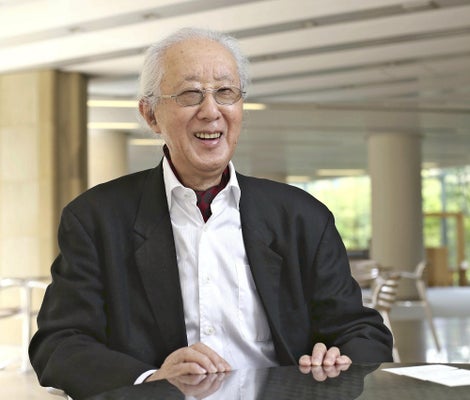
Major Works Overseas
Important works include the Museum of Contemporary Art, Los Angeles (1987), Allianz Tower (Milan, 2014), Qatar National Convention Centre (Doha, 2011), and Shanghai Symphony Hall (Shanghai, 2014).
Arata Isozaki’s Multifaceted Activities
Curating Architectural and Art Exhibitions
He served as curator for architectural and art exhibitions around the world, as well as competition jury member and symposium chairman. Representative planning and curation included the “Ma: Space-Time in Japan” exhibition (1978-1981), and serving as Commissioner for the Japan Pavilion at the Venice Biennale International Architecture Exhibition (6th to 8th editions).
In 1996, he won the Golden Lion Award for the Japan Pavilion exhibition “Crevice” at that exhibition. He organized the international conference on architectural thought “ANY Conference” for 10 years (1991-2000).
Writing Activities and Architectural Theory
Since publishing “Space” in 1971, he worked on many major and co-authored works, developing architectural theory. From 2013, he published “Arata Isozaki: Architectural Essays” (8 volumes), compiling essays from the past half-century.
His works include “Japoneseness in Architecture” (Shinchosha, MIT Press) and many others.
Creation of Architectural Models
Isozaki is also known as an architect who created numerous architectural models. Starting with the Museum of Contemporary Art, Los Angeles in the 1990s, major retrospective exhibitions were held both domestically and internationally. Currently, these models and materials are sequentially exhibited at the Arata Isozaki Architecture Exhibition Room at Art Plaza in Oita City, making it the most important base for understanding Isozaki’s architecture.
Nurturing and Discovering Architects
Isozaki’s role as a connoisseur and producer of contemporary architecture who brought unknown figures like Zaha Hadid, Tadao Ando, and Toyo Ito to the international stage is particularly noteworthy. His influence on subsequent generations of architects is immeasurable.
About the Exhibition “Arata Isozaki: Archipelago as Architecture”
Exhibition Overview
Currently, the Contemporary Art Gallery at Art Tower Mito is hosting “Arata Isozaki: Archipelago as Architecture,” the first major domestic retrospective exhibition since the passing of architect Arata Isozaki in late 2022 (November 1, 2025 – January 25, 2026).
Exhibition Structure
This exhibition, titled “Archipelago as Architecture,” configures Isozaki’s activities, which never remained within a single domain, as an “archipelago.” With keywords such as “City,” “Architecture,” “Buildings,” “Flux Structure,” “Tentative Form,” and “Beyond Architecture (Art),” the exhibition traces Isozaki’s trajectory through various media including architectural models, drawings, sketches, installations, videos, prints, and watercolors.
Main Exhibition Content
The exhibition features the “Reduction” series (1983), which preserved major buildings from the 1970s such as The Museum of Modern Art, Gunma as silkscreens, as well as 24 watercolor paintings (1994) based on architecture he worked on from the late 1980s to early 1990s.
Additionally, when Isozaki traveled overseas to Europe, America, and Asia, he visited classical and modernist architecture and recorded these in over 70 sketchbooks. These sketchbooks are valuable materials containing not only travel records but also concepts for architecture, exhibitions, and writing activities he was working on at the time.
Art Tower Mito Itself as an Exhibition Work
This exhibition “exhibits” Art Tower Mito itself as one of the works on display. Using the accompanying “Art Tower Mito Guidebook” (supervised and written by Taro Igarashi), visitors can experience Isozaki’s architecture in real life by touring inside and outside the building.
Exhibition Details
- Period: November 1, 2025 (Sat) – January 25, 2026 (Sun)
- Opening Hours: 10:00-18:00 (Last entry 17:30)
- Venue: Art Tower Mito Contemporary Art Gallery
- Admission: General 900 yen, High school students and under/70 and over: Free
- Guest Curators: Taro Igarashi, Ken Tadashi Oshima, Shigeru Matsui
What Arata Isozaki’s Architectural Philosophy Left for the Contemporary Era
Arata Isozaki’s architectural philosophy does not stop at merely designing buildings. Through architecture, he pursued the integration of multilayered concepts such as time, space, culture, and history to create new values.
Particularly in Japan, for the generation following Kenzo Tange, the general development of architectural discourse after 1970 is considered to have been largely organized by Isozaki. His influence extends not only to the architectural world but also to a wide range of fields including art, philosophy, and cultural theory.
Even now, when postmodern architecture has become something of the past as a single style, the questions Isozaki raised—What is architecture? What is the role of the architect?—continue to be asked by contemporary architects.
Conclusion
Arata Isozaki was a thinker who transcended the framework of an architect and led the cultural situation from the latter half of the 20th century to the early 21st century. His activities spanned architecture, art, criticism, education, and more, with immeasurable influence on subsequent generations.
The “Arata Isozaki: Archipelago as Architecture” exhibition currently being held at Art Tower Mito is a precious opportunity to encounter the full scope of this giant. This exhibition, where visitors can trace the trajectory of his thinking in the space of Art Tower Mito that Isozaki designed, will be a meaningful experience not only for those interested in architecture but for all who are interested in contemporary culture.
Arata Isozaki’s architecture continues to question us across time. What is architecture? What is space? And how should we live? It is by facing these questions that we inherit Isozaki’s legacy.









コメント