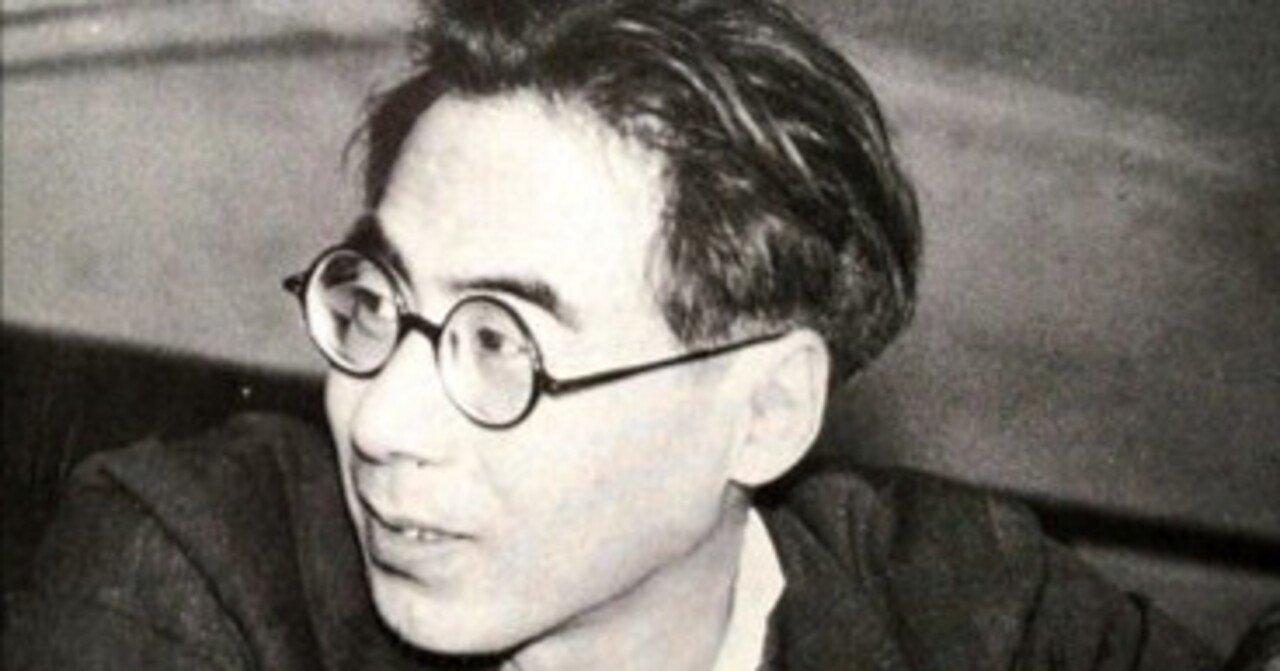
Every year on February 17, we mark the death anniversary of Sakaguchi Ango — one of the most iconic novelists of Japan’s Showa era — who passed away in 1955. Best known for works such as Discourse on Decadence (Darakuron) and The Idiot (Hakuchi), Ango rose to prominence in the turbulent post-war years with a provocative call: “Human beings — fall, more honestly.” His words have continued to stir the hearts of readers across generations. In this article, we carefully select Ango’s most treasured quotes and explore their meaning and context in depth.
Sakaguchi Ango (1906–1955) — A Brief Profile
Born in Niigata Prefecture. Real name: Heigo Sakaguchi. He graduated from Toyo University with a degree in Indian Philosophy and Ethics. His essay Discourse on Decadence (1946), published shortly after Japan’s defeat in World War II, caused a sensation and made him an overnight literary icon. He is counted among the “Buraiha” (Libertine School) alongside Osamu Dazai and Oda Sakunosuke. In his later years, he battled addiction to sleeping pills while continuing to write prolifically, until his sudden death from a cerebral hemorrhage at the age of 48.
① Quotes on Sorrow and Suffering — What Are the “Flowers” of Life?
“Sorrow and suffering are the flowers of life.”
Among all of Ango’s words, this is perhaps the most beloved. When we hear the word “flowers,” we instinctively picture something beautiful, something to be celebrated. Yet Ango boldly insists that “sorrow and suffering are the very things that make life bloom.”
This is no mere bravado or empty paradox. Joy alone cannot give a person depth. The more you have suffered, the sharper your capacity to feel. The more you have grieved, the more tenderly you can hold another’s pain. What Ango saw was the image of a human being who lives through the full range of emotion — without fearing the wounds that come with it. In an era that loudly preaches “positive thinking,” this quote offers a bracing, liberating alternative.
“The nobler the soul, the deeper it agonizes.”
This quote carries the power to validate those who feel burdened by worry. To wrestle with doubt and anguish is proof of a rich inner life and an honest way of living — so Ango tells us. It is not the person who never seems troubled who has achieved maturity; rather, it is precisely those who live with earnest attention who confront the contradictions of the world most deeply. Ango himself was an author who kept writing even while struggling with sleeping pill dependency. His words carry the weight of someone who faced his own suffering head-on.
② Quotes on Solitude and the Self — Loneliness as Hometown
“Solitude is the hometown of the human soul.”
A “hometown” is a place to return to, a place of rest. So what does it mean to say that place is “solitude”?
For Ango, solitude was neither something to fear nor to flee from — it was the root place that is native to every human being. We live in connection with others, yes — but in the end, it is each of us alone who must face our own inner world. By calling this solitude a “hometown,” Ango affirms it and urges us to return there. For people today, constantly connected through social media yet afraid of being alone, these words cut deep.
“What Japan needs is not the establishment of institutions or politics, but first the establishment of the self. All that is truly needed is to honestly look at one’s own heart — to love, to desire, to grieve, to hate — without pretense, and to listen carefully to the cry of one’s own soul. Without the establishment of selfhood, there can be no genuine sense of justice, duty, or responsibility.”
This is the heart of Ango’s social critique. Even if institutions and laws are well-structured, without each individual genuinely confronting their own soul, no true sense of responsibility or morality can emerge — a claim that feels remarkably contemporary for something written in Japan’s post-war reconstruction era. Rather than training people to “become proper members of society” by shaping them from the outside, Ango insists that the far more fundamental act is to honestly feel one’s own likes and dislikes, one’s grief and anger, without falsification.
③ Quotes on “Decadence” and Living — There Is No Shortcut to Saving Yourself
“Humans live, and humans fall. Beyond that, there is no convenient shortcut to saving humanity.”
This quote distills the spirit of Ango’s masterwork, Discourse on Decadence, into a single sentence. When we hear the word “decadence” or “falling,” we tend to picture going astray. But for Ango, it meant something different. “Falling” meant stripping away pretense and ideology to face the naked truth of human existence.
In post-war Japan, where the value system of “dying for the Emperor” had collapsed, Ango argued that “one must first fall.” Not by playing the hero, not by seeking salvation in institutions — but by living as a flesh-and-blood human being, getting hurt, and rising again. Only there can genuine rebirth occur. “There is no convenient shortcut” reads as a sharp critique of today’s “laws of success” and “easy transformation” content culture.
“That living is all that matters — this single truth is not understood. … You must show that you can live, that you can see it through, that you can keep fighting. You can die anytime. Don’t do something so pointless. You shouldn’t do things you can do anytime.”
These words are an overwhelming affirmation of being alive. There is a paradoxical strength here: “You can die at any moment — so pour everything into living now.” Rather than treating death lightly, Ango speaks directly to the difficulty and the dignity of living all the way through. When times are hard, these words may help you find a reason to keep going.
④ Quotes on Love and Human Relationships — Love as Life’s Greatest Theme
“Love is the eternal problem of humanity. I believe that as long as humans exist, love is probably the most central thing in human life.”
Ango’s novels are filled with fierce, consuming love — in The Idiot, in The Princess of the Long Night and Mimio, and elsewhere. For him, love was “the thing that lays bare the essence of human beings most completely.” Beyond reason and social convention, people are helpless before love. That is precisely why love remains an eternal question.
“Love is neither words nor atmosphere. It is simply, only, the one thing called: I love you.”
Not eloquent declarations or carefully staged romance, but the purity of a simple, unadorned “I love you” — that, says Ango, is the core of love. In an age where people craft dating profiles and choreograph romantic scenarios, this quote resonates. The essence of love lies not in polished language but in the raw, exposed feeling of caring for someone.
“The heart of the adult who knows that love is always a fleeting illusion — that it will inevitably perish and fade — is an unhappy heart.”
This is not a rejection of love. Ango gazes at the bittersweet beauty of “loving with everything, even while knowing it is an illusion.” The sadness of living with a detached, knowing eye — telling yourself “it’ll end anyway” — the loneliness of the adult who has seen too much: Ango illuminates all of this with quiet tenderness.
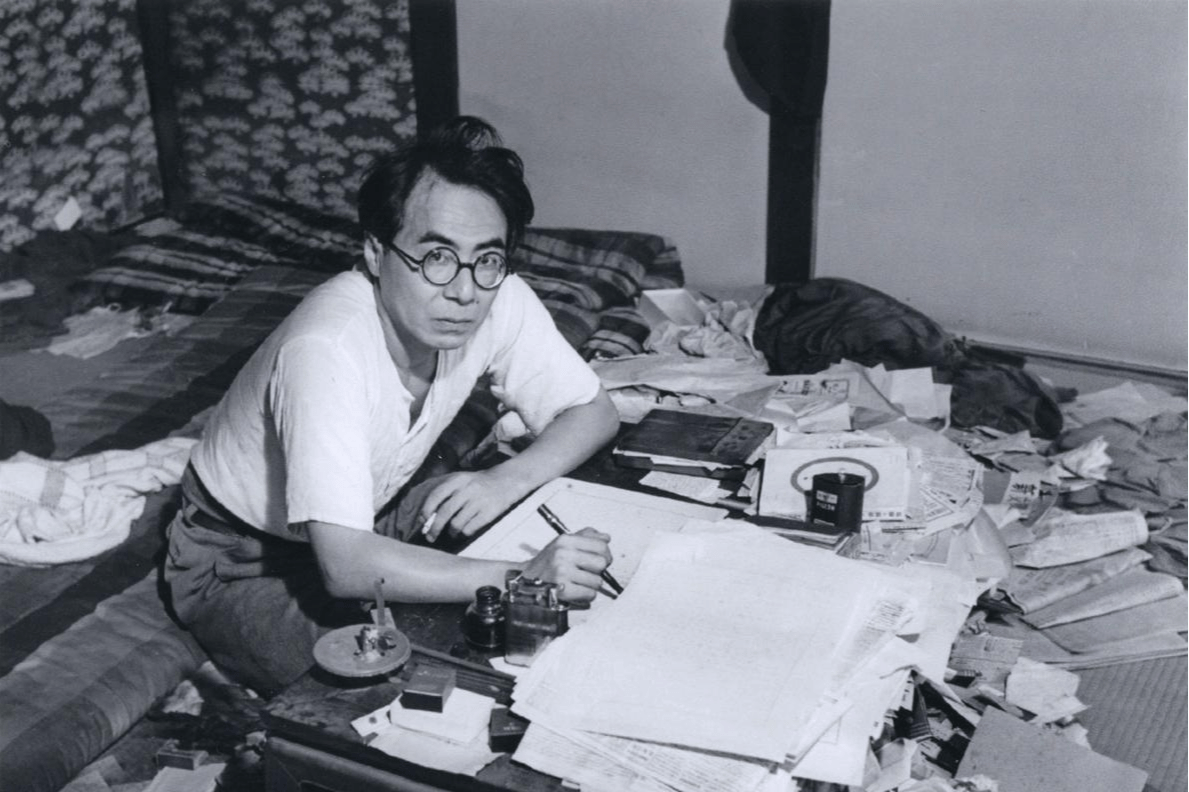
⑤ Quotes on Freedom and Individuality — The Unfreedom Within Freedom
“Without individual freedom, life is equal to zero. You must never impose anything on others.”
Throughout his life, Ango held individual freedom and autonomy as the highest values. This was partly a reaction against the wartime compulsion to sacrifice oneself “for the nation” — but it went deeper. Even well-intentioned impositions of one’s values on another, he argued, amount to a negation of that person’s life.
“It is only when all freedoms are permitted that a person first becomes aware of their own limitations and the constraints within themselves.”
This is a quote that strikes at the heart of the philosophy of freedom. True freedom is not the absence of constraints — it is being asked what you will choose within them — and paradoxically, we only realize this when told “you can do anything.” In an era where “anything is possible,” this is a sharp challenge to those of us who don’t know what we should do.
“The arrogant goodness of saying ‘I am this way, so you must be this way too’ is truly beyond saving. The sins of good people are an unbearable thing.”
Ango names the problem of “the imposition of good intentions” with striking clarity. The interference that comes not from malice but from benevolence is the most insidious of all — and it plays out daily in families, friendships, and workplaces. Ango never failed to notice the arrogance lurking behind the words “I’m doing this for your own good.”
⑥ Quotes on War, Literature, and Life — Ango’s Conviction
“The true seedlings of beautiful things must be desperately protected and nurtured. I curse war most of all. Yet I will eternally praise the kamikaze pilots.”
This is one of Ango’s most complex and most honest statements. To curse the “institution” of war while praising the purity of the “human beings” who staked their lives within it — it seems like a contradiction, yet no words are more saturated with love for humanity. To despise systems and ideologies while revering the souls of the people caught up in them — this perspective of Ango’s shines with a singular light in the landscape of post-war Japanese literature.
“If politics deals with the masses, then literature deals with the human being.”
Politics seeks to move human beings as a collective. But literature, Ango insists, depicts the joys and sorrows, the contradictions, the frailties, and the beauty of a single, nameless individual. In that distinction lies his pride and his entire program as a writer.
“The fatigue of life has nothing to do with age.”
Some people are exhausted in youth; others are vibrant in old age. Weariness is not a matter of years but of how one is living — a short sentence, but one that sounds like a quiet word of encouragement to the people of our exhausted modern world.
Conclusion | What Sakaguchi Ango Wanted to Tell Us
Running through all of Sakaguchi Ango’s quotes is a single message: “Live without pretense.” Calling sorrow a flower, affirming decadence, declaring solitude a hometown — his words are a fundamental challenge to the life of keeping up appearances.
Ango valued being genuine over being correct. Establishing the self rather than sheltering under institutions. Protecting individual freedom rather than imposing good intentions. Living through and seeing it out, rather than looking for an easy shortcut — all of these resonate with particular force in our own time.
On February 17, his death anniversary, take a moment to sit with Ango’s words. It may become a quiet, rich time to look honestly at your own heart — without pretense.
References: Sakaguchi Ango, Discourse on Decadence, The Idiot, My Personal View of Japanese Culture, and other works. All quotes in this article are drawn from Ango’s writings and recorded statements.




コメント